AN INDEPENDENT SOFTWARE STUDIO

Anyone can promise.
We make ours checkable.

We build software for ourselves and for businesses, under one rule: a promise that matters becomes a check the build runs. If it cannot fail, it was never a promise — only a hope.

Three products of our own, and one set of rules behind them.

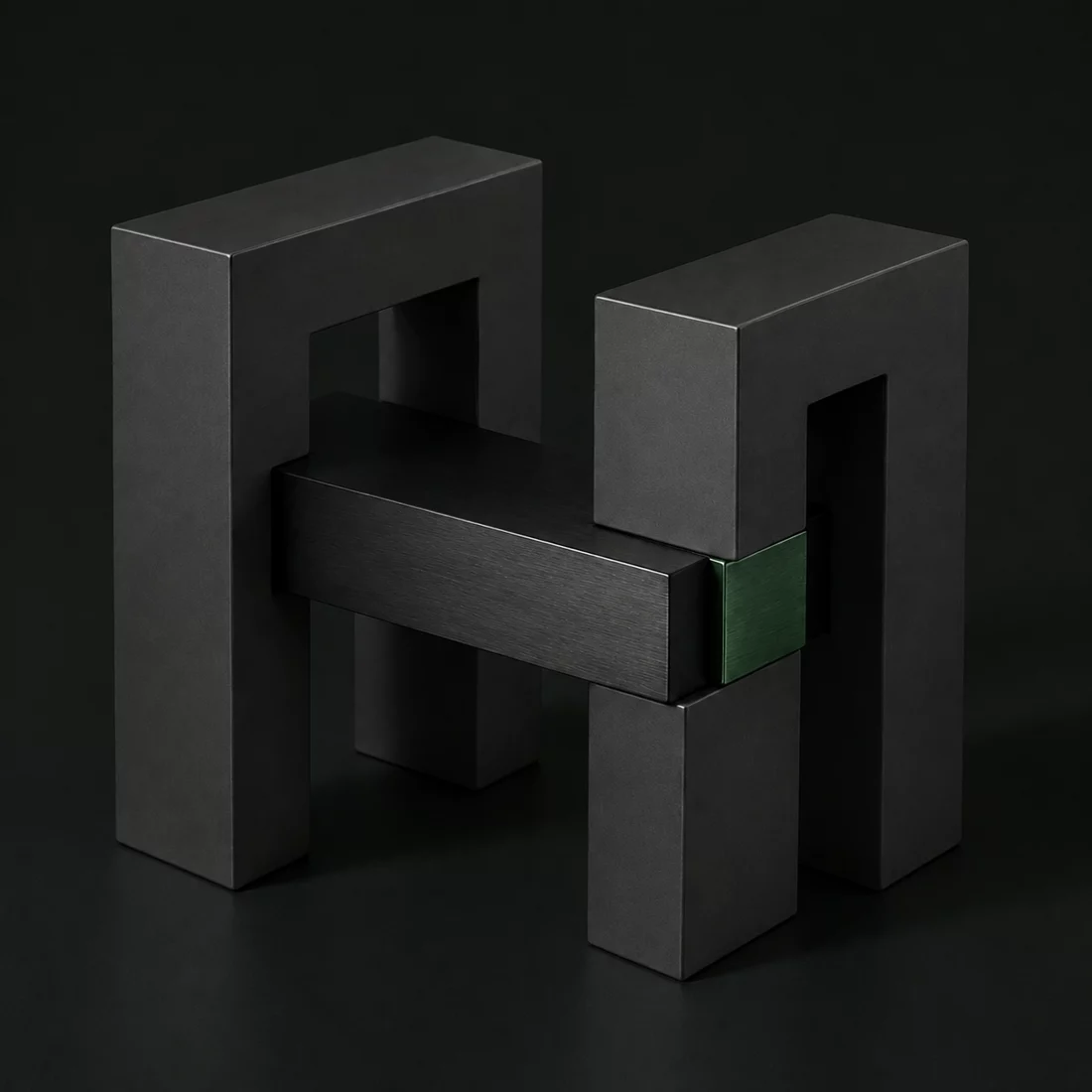
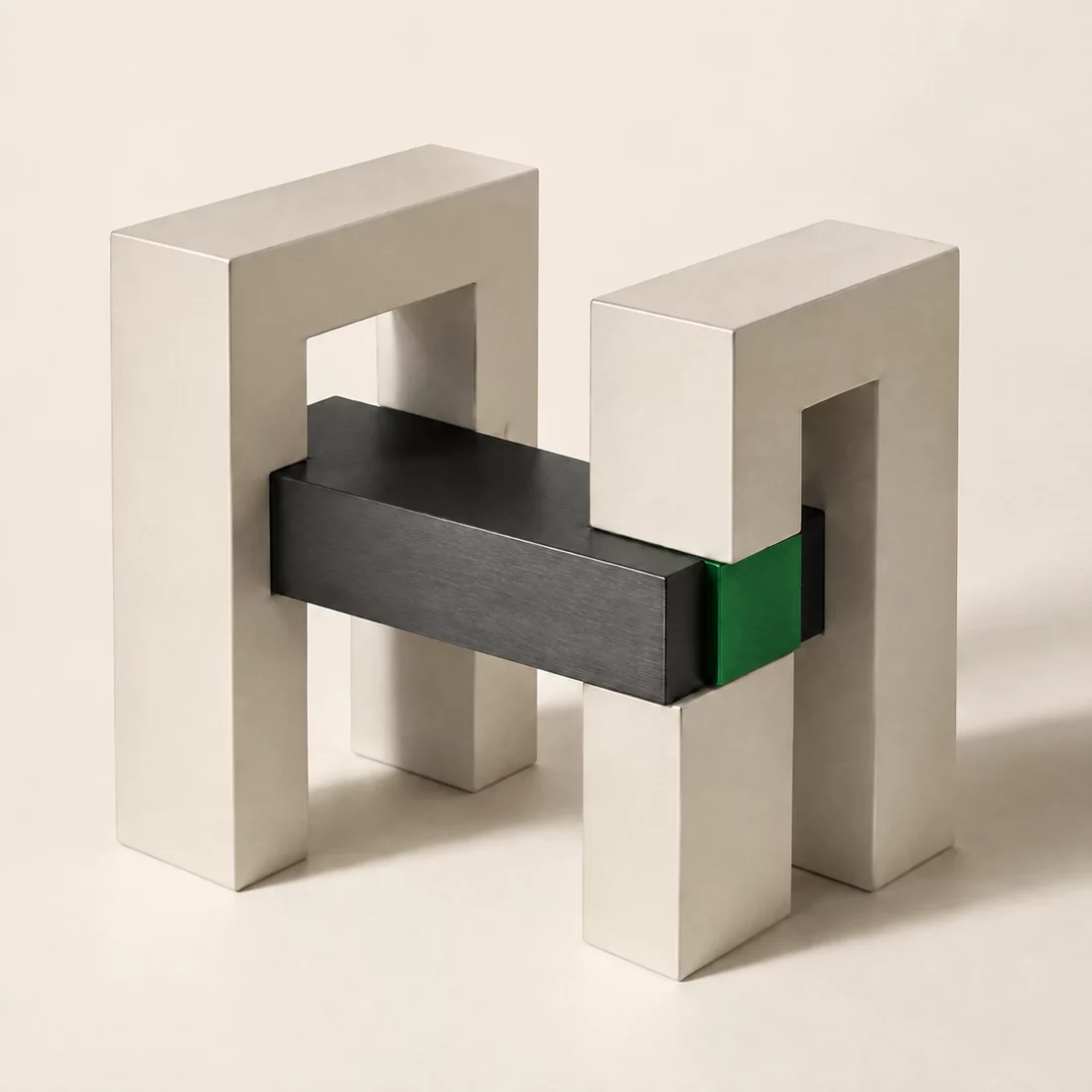
Ivory architectural structures joined by a graphite beam and a green connection, representing independent products built on shared rules. Graphite architectural structures joined by a green connection, representing independent products built on shared rules.
+ Independent parts. Shared rules.+
WHAT WE MAKE. WHAT WE REFUSE.
ProductsCapabilitiesServices

Built to be trusted.
Built so it cannot cheat.

Three products of our own.
Each states a promise — and each has a check that fails the build if the promise stops being true.

BrightKidz Hub

Live

“No ads, no sign-in, no data.”

Free reading for curious children, seven to twelve. 165 articles across six subjects, 15 games, 261 hand-drawn illustrations. It needs no account, and it keeps working offline.

The check

The deploy fails on any external link, any remote image, any unresolved placeholder. A page that could phone home never ships.

  • Offline
  • No account
  • AAA body text

ZadVest

Private preview

“Instrument, don’t advise.”

A self-directed trading workspace. Connect your own broker, research, scan for chart patterns, build rules without writing code, and test them against history. It screens holdings against the AAOIFI Shariah standard. Your money never leaves your broker.

The check

The legal disclosure lives in one file pinned by a test, so an edit cannot quietly drop the broker attribution. No accuracy figures anywhere: reliability is labelled history, never edge.

  • Non-advisory
  • Your broker, your funds
  • Shariah screening

In private preview. Signup is closed, and no performance is claimed or implied.

Ramz

Coming to Google Play

“The reminder arrives showing a photo of the actual thing.”

Photograph the pill bottle, the shelf, the form, the door. Write your own words on the picture, choose a time, and at that time the picture comes back. Nothing to type and nothing to describe. Five languages, right-to-left in Arabic.

The check

A test reads the built manifest and fails if the app has gained camera or internet access. It has neither. And when Android will not allow an exact time, Ramz says “about 6:00 pm” rather than pretending.

  • No account
  • No server
  • Works offline

Built, signed and verified on a device. Not published yet, so there is nothing to install today.

Separate products. One set of rules.

Three apps don’t show
the whole range.

These are the kinds of system we build. We are not describing anyone else’s project — for each one, the engineering is already running in something of ours that you can open and inspect.

  • Data and document pipelines

    Turning messy inputs — filings, feeds, PDFs — into something a system can act on, with every input it cannot read reported rather than quietly skipped.

  • Applied AI, with evaluation

    Language models placed where they earn their keep, inside a harness that measures the output instead of trusting it.

  • Decision systems

    Rules, scoring and gating that a person can audit, a test can hold to account, and a user can be shown the reasons for.

  • Authenticated web apps

    Accounts, roles, billing and third-party integrations on managed cloud — built so the browser never holds what it should not.

  • Android apps

    Offline-first, accessible, localised, and taken through store review to the point of being installable.

Two things we sell.
Nothing else.

We are a small studio.
Saying yes to everything is how a small studio ships nothing well.

Build the whole
product.

Design, build, ship and operate it. You get a working product and the reasoning behind it — not a body in a seat, and not a deck.

What you get
A product in production, its tests, its deploy, and a written record of every decision that could be argued with later.
What you bring
The problem, access to the people who live with it, and someone who can decide.
What we refuse
A promise in a document with nothing enforcing it. If we cannot write the check, we will say so rather than write the sentence.

Applied AI and
ML systems.

Decision systems a model gates rather than decorates: agentic pipelines, evaluation harnesses, and the governance that keeps a model’s output accountable.

What you get
A system whose model is measured against a held-out bar, with the failure modes named and the fallback defined.
What you bring
The data, the decision the model is meant to serve, and an honest account of what a wrong answer costs.
What we refuse
A model whose evaluation cannot fail. An accuracy number with no null benchmark beside it. An agent with no human checkpoint on a decision that can hurt someone.
  1. 01

    Find the real problem.

    Before anything is designed — and often it is not the stated one.

  2. 02

    Design the right system.

    A practical blueprint, with the checks named up front.

  3. 03

    Build it and put it to work.

    Working software, in production, with its gates running.

  4. 04

    Learn and make it better.

    Measure it, correct it, and keep the correction legible.

Clarity. Structure. Momentum.

“Why hire a studio whose shipped products are a children’s reading site and a reminder app?”

Because the products are small and the constraints are not. A children’s site is where a broken privacy promise costs the most; a reminder app is where a silently dropped alarm costs the most. We chose them because they are unforgiving. Behind them sits a trading workspace carrying a twenty-workstream compliance screen, an evaluation harness for the models inside it, and an infrastructure bill we adjudicate line by line. What you are buying is not the apps. It is the discipline that made them — applied to yours.

One principal engineer, working with AI agents. The consumer products are young, and we would rather show you the checks than claim a track record we do not have.

Five rules.
Each one with a receipt.

A principle nobody can check is a preference. Each of these is one we can show you happening, in products you can open.

Enforced, not intended.

A rule that lives in a document is a hope. A rule that fails the build is a rule.

BrightKidz refuses to deploy with a remote image in it. ZadVest’s disclosure is pinned by a test. Ramz’s build asserts that camera and internet access are absent.

Yours stays yours.

We do not take what we do not need, and we build so that we cannot.

No analytics or cookies in BrightKidz. No account or server in Ramz. In ZadVest your money never leaves your broker, and the browser never touches a raw brokerage key.

Honest about limits.

Where the platform will not let us be exact, we say so — in the product, not the footnote.

Ramz says “about 6:00 pm” when the system will not promise better, and reports a reminder the phone dropped. ZadVest publishes no accuracy figure at all.

Built for the person, never against them.

Nothing we make is designed to exploit attention, fear, or a child.

BrightKidz has no streaks to break and no timer anywhere; its arcade never takes a star away. Ramz carries no advertising, and a feature that shipped free stays free.

Accessible by measurement.

Accessibility is a gate the build runs, not a box a designer ticks.

BrightKidz holds AAA on body text. Every Ramz screen survives the largest system font uncut. In one product an ink colour measured 2.32:1 against the darkest skin tones — caught by measuring before anything was drawn.

When we’re wrong, it stays legible.

We correct things in place and in public: the superseded claim stays beside the fix, dated, so the change reads as a change. A stale warning is worse than no warning. Our own market study this month named its kill criteria before it collected any evidence — and then killed the idea its author liked best.

Fair questions.
Straight answers.

You’re small. Why is that not a risk?

It is a real one, and you should weigh it. What you get in exchange is that the person who scopes the work is the person who builds it, so nothing is lost in a handoff, and our standards are not a policy somebody else has to be persuaded to follow. If your project needs a team of forty, we are the wrong call, and we will say so in the first conversation rather than the third month.

Can I use ZadVest?

Not yet. It is in private preview: the system is deployed and running, but public signup is closed while a broker integration goes through review. It is software you operate yourself — it does not give advice, does not manage money, and publishes no performance claims.

When is Ramz on Google Play?

Soon, but we are not promising a date. The app is built, signed and verified on a physical device, the store listing is written, and submission is next. We will add the download link the day it goes live and not a day before — a store badge that leads nowhere is exactly the kind of small lie we work to avoid.

Do you use AI to build this work?

Yes, extensively, and we would rather say so plainly. It changes what one engineer can carry; it does not change what has to be true at the end. Every output goes through the same gates as anything else — tests, review, and a check that can actually fail. An AI-written rule with nothing enforcing it is worth exactly as much as a human-written one.

Who owns the code, and do you sign NDAs?

Client work is the client’s, and we sign mutual NDAs as a matter of course. The specifics belong in an engagement agreement rather than on a marketing page — raise it in the first conversation and we will put it in writing.

What does this website collect about me?

No cookies, no analytics, no third-party requests — even the fonts are served from this domain. The brief builder runs in your browser, and Download and Copy keep it there. Pressing Send is the one thing that transmits anything: your name, company, work email and what you wrote go into our contact records so that we can reply. That, plus our host’s ordinary server log, is the whole of it, and the privacy policy says how long we keep it and how to have it deleted.
Write the brief.
Send it when
you’re ready.

Tell us about the work that could work better.
That is a good place to start.

Your ambition.
Our engineering.

Start with a project brief.

A few details to give your next conversation a head start. Nothing leaves your browser until you press Send.

Send puts your name, company, work email and what you wrote into our contact records, so that we can read it and reply. Download and Copy do neither — they stay on your device.

Your brief, as plain text.

Or write to us directly: hello@sanadtech.us